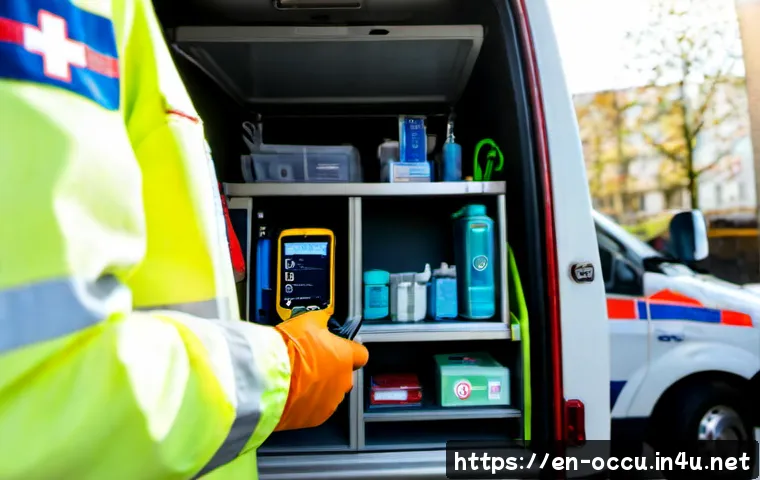
Reliable EMS workflow starts with three priorities: scene readiness, concise team communication, and complete patient care records. The best tools and training support those habits, but they never replace local protocols, medical direction, employer policy, or certification limits.

A short pre-shift check can prevent avoidable equipment gaps before the first dispatch. Structured communication can make reassessment findings and transfer-of-care details easier for the next team to follow.
Documentation deserves the same attention as patient contact because the patient care report is both a clinical and legal record. Before spending on EMS training, duty gear, or ePCR workflow tools, compare the specific problem you need to solve against the time and implementation burden involved.
At a Glance
- Start safe: Confirm scene readiness and situational awareness before assessment or treatment.
- Communicate clearly: Use concise, structured updates within the crew and during handoff.
- Document defensibly: Complete objective patient care records promptly, then restore equipment readiness.
| Workflow Need | Free Habit to Start With | When a Paid Option May Be Worth Reviewing | Decision Criteria |
|---|---|---|---|
| Clinical confidence and team coordination | Review local protocols, discuss calls, and practice clear closed-loop communication. | Refresher training, specialty education, or simulation-based EMS training. | Does it address a repeated gap, match your role, and fit agency requirements? |
| Duty readiness | Use a written inventory, battery, cleaning, restocking, and expiration check. | Durable duty gear or diagnostic tools that meet agency compatibility requirements. | Consider durability, maintenance needs, compatibility, and approved use. |
| Documentation quality | Document promptly using objective language and a consistent review routine. | ePCR workflow tools, templates, or clinical documentation software. | Compare implementation burden, usability, workflow fit, and agency approval. |
The Field Habits That Improve Every EMS Shift
The most useful EMS habits are usually simple enough to repeat on every shift. Scene safety, team communication, and complete records protect continuity of care from dispatch through post-call reset. The challenge is maintaining those habits when the scene is busy, stressful, or emotionally difficult.
Three priorities: scene safety, team communication, and complete records
Scene safety and situational awareness come before patient assessment or treatment. Pause long enough to understand the environment, available resources, and any changing hazards. Then keep communication direct: confirm assignments, repeat critical information when needed, and make sure the intended person received the message.
Complete records are the third priority because the patient care report supports both clinical continuity and the legal record. A report should reflect what was observed, what care was provided, how the patient responded, and what concerns remained at transfer of care. Avoid filling gaps with assumptions or conclusions that are not supported by the call record.
A fast pre-shift readiness routine
A short readiness routine is more reliable than trying to remember everything after dispatch. Use a checklist that fits your unit and local policy:
- Confirm required equipment is present and organized.
- Review battery status for relevant devices.
- Check supplies, restocking needs, and expiration dates.
- Confirm cleaning or decontamination tasks are complete.
- Identify communication issues, documentation access issues, or missing items before going available.
The goal is not a perfect-looking compartment. The goal is functional readiness under pressure. If equipment is missing, expired, depleted, or not ready for use, follow the agency process before the problem becomes a call-time surprise.
What to do when local protocol and real-world pressure collide
Real scenes can create pressure to move faster, improvise, or follow someone else’s expectations. Your foundation remains your certification level, employer policies, medical direction, and local protocols. When uncertainty appears, slow the decision down enough to clarify roles, communicate concerns, and use available command or clinical support channels.
Do not let a crowded scene, an impatient bystander, or a rushed receiving environment turn a workflow shortcut into a care or documentation gap. Protocol alignment is part of professionalism, not an obstacle to efficiency.
Compare High-Value EMS Investments Before You Spend
EMS spending is most useful when it removes a known operational problem. A purchase or course is not automatically valuable because it is popular, advanced, or heavily marketed. Compare it against your actual call mix, agency standards, workflow friction, and maintenance capacity.
Refresher courses, specialty credentials, and simulation training
Self-study can support protocol review and knowledge maintenance. Paid EMS training may be worth considering when a clinician or crew needs guided practice, structured feedback, simulation exposure, or education tied to a recurring operational need. Specialty credentials may also be relevant where they align with an employer’s expectations or professional goals.
Before enrolling, ask: What problem will this training solve on shift? Also confirm whether the provider, course format, schedule, and completion requirements fit your agency and jurisdiction. Course pricing and recognition vary, so verify those details directly with the provider and employer.
Duty gear and diagnostic tools: durability, compatibility, and maintenance
Duty-ready equipment should be evaluated for more than convenience. Consider whether it is compatible with agency operations, whether it can be cleaned and maintained appropriately, and whether it remains practical during long shifts. A tool that is difficult to charge, inspect, store, or replace can create its own readiness burden.
Look for durability, compatibility, maintenance requirements, and approved use. Do not assume a device is appropriate simply because it is marketed to EMTs or paramedics. Agency policy, local protocol, and your authorized scope determine how equipment may be used.
ePCR and documentation workflow tools: time savings versus implementation burden
Clinical documentation software can help standardize workflow, but the value depends on real-world adoption. A platform or template may reduce repeated steps for one team while creating extra review work for another. The best fit is usually the one that supports accurate, timely, objective charting without encouraging copy-forward habits or missed narrative details.
Before adopting an ePCR workflow tool, consider training time, field usability, access reliability, agency approval, and how the system supports review before submission. A streamlined interface is useful only if it still helps clinicians capture the condition, care, response, and unresolved concerns accurately.
Build a Reliable Call Workflow From Dispatch to Transfer of Care
A repeatable call workflow lowers the chance that stress will decide what gets overlooked. It does not replace clinical judgment or protocol-based decisions. It gives the crew a stable sequence for gathering information, coordinating tasks, reassessing, and communicating what the next team needs.
Dispatch review, approach planning, and scene-size-up
Start with the information available at dispatch, but treat it as a starting point rather than a complete picture. As the crew approaches, plan who will communicate, who will bring needed equipment, and how the team will update one another. At the scene, situational awareness comes first.
A practical question is: What has changed since dispatch, and what does the team need to know now? This helps prevent tunnel vision and keeps the approach connected to the actual environment rather than assumptions.
Assessment, reassessment, and closed-loop team communication
As care progresses, share relevant observations and changes clearly. Closed-loop communication means a message is directed to a specific person, acknowledged, and confirmed when appropriate. This can be especially useful when multiple tasks are happening at once or when the call involves more than one agency.
Reassessment also matters because a patient’s condition and the scene can change. Communicate updates in a way that distinguishes what was observed earlier from what is observed now. This supports better team awareness and gives the receiving team a clearer account of the call.
Concise handoffs that communicate what the next team needs
A clear handoff should help the receiving team understand the patient’s condition, the care already provided, the patient’s response, and outstanding concerns. Structured handoff formats can reduce omissions because they create a consistent order for sharing information.
Keep the handoff concise but complete. Avoid forcing the next team to search through unrelated details for the key issue. If the environment is noisy or interrupted, confirm that important information was heard and identify what still needs attention.
Avoid Documentation and Equipment Mistakes That Create Bigger Problems
Small shortcuts can become major continuity-of-care problems when they affect records or equipment readiness. The most dependable prevention method is a consistent post-call reset: document, clean, restock, charge, and review.
Write objective patient care reports promptly and completely
Patient care reports are clinical and legal records. Complete them promptly while the sequence of events is clear. Use objective language that separates observed facts, actions taken, patient response, and information received from others.
Before finalizing, review whether the report explains the care pathway well enough for another care team to understand it. A useful final check is whether the chart captures condition, care, response, and remaining concerns without unsupported assumptions.
Restocking, decontamination, batteries, and expiration checks

Post-call readiness is not an optional cleanup task. It is preparation for the next patient. Replace used supplies, complete required cleaning or decontamination, check battery status, and review expiration dates according to agency procedure.
When something cannot be restored immediately, make the gap visible through the proper agency process. Quietly leaving an issue for the next crew creates risk for everyone.
Common shortcuts that can compromise continuity of care
Examples include delaying documentation until details blur, relying on memory instead of an inventory process, assuming another crew member completed a check, or giving an unstructured handoff because the receiving area is busy. These shortcuts may feel faster in the moment, but they can create avoidable uncertainty later.
A better approach is to assign ownership, confirm completion, and use a checklist where the task is repetitive. Checklists do not replace judgment; they protect attention when fatigue and interruptions are present.
Adapt Your Workflow to Different Call Types and Team Settings
A solid workflow should flex with the call without losing its core safeguards. The same priorities remain: safety, clear communication, reassessment, complete transfer of information, and ready equipment.
Routine transport versus high-acuity response
Routine transports may allow more time for preparation and documentation review, but they still require attention to changes in patient condition and clear transfer-of-care information. High-acuity calls can compress decision time and increase task load, making role clarity and closed-loop communication more important.
Do not treat a routine call as a reason to relax documentation standards, and do not let a high-pressure call eliminate the need for a concise handoff. Adjust the pace, not the fundamentals.
Working with fire, law enforcement, hospital staff, and multiple EMS crews
Multi-agency scenes require deliberate communication because each group may be focused on different responsibilities. Identify the right point of contact, clarify who is handling which task, and avoid assuming that a message has reached everyone who needs it.
At transfer of care, focus on the patient-specific information the receiving team needs. Clear communication supports coordination without crossing role boundaries or replacing local command structures.
Managing fatigue, difficult scenes, and post-call learning
Fatigue, stress, and repeated high-acuity calls can affect attention, communication, and decision-making. Recognizing this is not a weakness; it is a reason to rely more heavily on checklists, team confirmation, and deliberate documentation review.
After a difficult call, a brief operational review can identify workflow improvements: Was equipment ready? Did communication break down? Did the handoff leave unanswered questions? Use those lessons to improve the next shift while following agency processes for support and review.
Choosing Training, Tools, and Support: A Decision-Stage Comparison
Use the following questions before investing in EMS training, duty equipment, clinical documentation software, or professional liability coverage. The right choice depends on your role, employer requirements, local rules, and the gap you are trying to address.
When a free checklist is enough and when paid training is worth considering
A free checklist may be enough when the problem is consistency: missed restocking, incomplete battery checks, or an unreliable post-call documentation routine. Paid EMS training may deserve consideration when the need involves structured practice, supervised feedback, simulation, or an identified professional requirement.
Ask whether the training improves a recurring workflow issue rather than simply adding another credential to a resume.
Questions to ask before adopting equipment or documentation software
Before selecting duty gear, diagnostic tools, or ePCR workflow software, ask:
- Is it compatible with agency operations, approved processes, and local requirements?
- Will it improve readiness, communication, or documentation quality in a measurable practical way?
- What maintenance, training, cleaning, charging, or implementation burden does it add?
- Does it fit the environment where it will actually be used?
- Who is responsible for ongoing support, review, and replacement?
A practical priority order for individual clinicians and EMS leaders
Start with reliable basics: protocol-aligned workflow, scene readiness, equipment checks, concise communication, and complete documentation. Next, address the most frequent operational bottleneck with targeted training or a better process. Only then evaluate larger investments in equipment, software, or coverage support.
For product specifications, training recognition, software implementation details, and professional liability coverage terms, review the official provider information and confirm agency requirements before making a commitment.
Selection Criteria and Comparison Summary
Before you spend, check whether the option solves a real recurring problem, fits your certification and agency requirements, works with existing equipment or documentation processes, has manageable maintenance demands, and supports safer communication or more complete records. For EMS training, duty equipment, ePCR tools, or professional liability coverage, compare the official terms, included support, and employer compatibility on the relevant provider page.
In Closing
Strong EMS workflow is built from repeatable habits rather than one perfect tool or course. Start every shift with readiness, keep the crew aligned through clear communication, and treat documentation as part of patient care continuity. Use post-call reset tasks to protect the next response. When considering paid training or equipment, choose the option that supports a verified operational need within local policy and medical direction.
Useful Information to Keep in Mind
1. A structured handoff can reduce missed information during transfer between care teams.
2. Regular inventory, battery, cleaning, restocking, and expiration checks support equipment readiness.
3. Objective, timely patient care reports support both clinical continuity and the legal record.
4. Fatigue and stress are workflow risks, so use team confirmation and checklists when attention is strained.
Important Notes
This article provides workflow guidance only and does not replace local protocols, medical direction, employer policies, certification requirements, or jurisdiction-specific scope-of-practice rules. Medication authority, permitted clinical actions, documentation standards, equipment approval, and training requirements must be confirmed with the appropriate local authority or agency. No equipment, software, course, insurance policy, or workflow is universally best for every EMS service.
Frequently Asked Questions
Q1. What are the most useful daily habits for an EMT or paramedic?
A1. Start with scene readiness, a consistent equipment check, direct team communication, objective documentation, and a post-call reset. These habits support safer operations across routine transports, high-acuity calls, and multi-agency scenes.
Q2. Is paid EMS refresher training worth the cost compared with self-study?
A2. It may be worth considering when you need structured practice, simulation, feedback, or education connected to a recurring workflow gap or employer requirement. Self-study may be sufficient for routine review, but course relevance, recognition, requirements, and cost should be confirmed directly with the provider and agency.
Q3. What should EMS professionals compare before choosing duty equipment or documentation software?
A3. Compare compatibility with agency operations, approved use, durability, maintenance needs, training requirements, field usability, and the effect on readiness or documentation quality. Confirm local requirements before adopting any equipment or reporting workflow.